Vitamin D: its impact on hair loss and regrowth
The hair follicles (where the hair begins) have vitamin D receptors (“VDR”, Vitamin D Receptor) which play a crucial role in the hair renewal and growth. Without, or with too little vitamin D, the hair fiber weakens, until it no longer grows properly and ultimately causes a loss of hair density or a hair loss. This deficiency can also be linked to an increase in the quantity of sebum, the excess of which has a harmful effect on the scalp, and therefore also on the hair.
A study carried out on mice demonstrated that a vitamin D supplementation quickly grew their hair. The vitamin D3 (the most active form) is therefore an essential ally against hair loss and alopecia.
Why does Vitamin D deficiency cause hair loss?
The Vitamin D deficiency does not always directly cause hair loss severe, but it represents a aggravating factor major. A rate that is too low disrupts the hair cycle : the hair enters the resting phase more quickly and the hair regeneration is slowed down. So, although this vitamin does not replace medical treatment, it is very effective as a solution. preventive and curative to support the grows back and hair density when the cause is a proven deficiency.
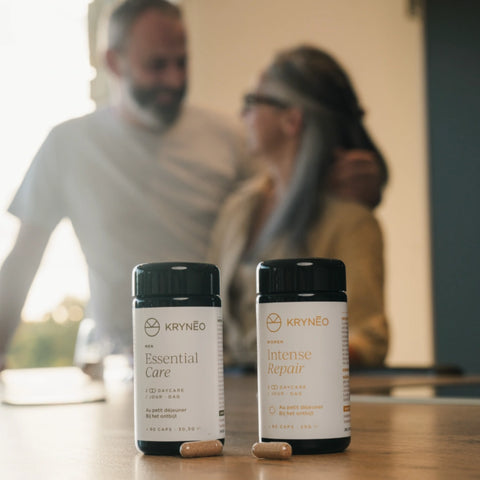
The cure Essential Care Krynéo is the most complete on the market with more than 16 ingredients, vitamins and minerals, including vitamin D3.


Why Vitamin D is essential for overall health
Vitamin D isn't just for hair health. It plays a major role in the proper functioning of the body and could help prevent or support the treatment of certain diseases such as:
-
Psoriasis
-
Colon and breast cancer
-
Multiple sclerosis
-
Type 1 diabetes
An optimal presence of vitamin D combines a preventive role, by strengthening health to avoid illness, and a curative role, by helping certain pathologies to treat illness.
Although future research will continue to shed light on the full power of this vitamin, there is currently no no doubt about its importance.
3 effective solutions to combat vitamin D deficiency and stop hair loss
The main source of vitamin D is the sun, but exposure to it is generally not sufficient, especially in urban areas and in France, Belgium, Switzerland; where only 10% of the population would reach a satisfactory rate.
For stock up on vitamin D and reduce the hair loss due to this deficiency, opt for 3 simple solutions:
Optimize sun exposure
Take advantage of the summer to stock up on vitamin D: 20 minutes 3 times a week, with face, neck, shoulders and arms uncovered (but protected harmful UV rays with a sunscreen adapted to your skin).
Caution: For the elderly, smokers, dark skin and very overweight people, exposure must be 3 to 5 times higher to allow equivalent vitamin D synthesis.
Favor the food rich in Vitamin D
Consume rich foods in vitamin D, such as oily fish (salmon, sardines, tuna, herring), egg yolk, the milk and the mushrooms.
Opt for a course of food supplements rich in Vitamin D
The most reliable solution to fill a vitamin D deficiency is often supplementation. Make a vitamin D cure in autumn and in winter to support your overall health and hair health.
At Kryneo, we have developed 2 cures, for men and women, which contain vitamin D3, essential for the health of the hair follicle to stop hair loss, boost regrowth and fill vitamin D deficiency.

Vitamin D, preventive support for your hair
Vitamin D is not a miracle cure for severe hair loss, but it plays an important preventive role. It supports hair regeneration and helps your hair stay strong and healthy all year round.
It is important to note that there is several types of hair loss :
-
Diffuse alopecia : uniform hair loss across the entire scalp, often linked to stress, fatigue or nutritional deficiencies, including vitamin D.
-
Androgenetic alopecia : gradual decline linked to genetics and hormones, where vitamin D may play an indirect role in supporting follicle health.
-
Alopecia areata : localized fall in plaques, of autoimmune origin; some studies suggest that vitamin D may help regulate the scalp's immune response.
-
Seasonal fall or temporary : often linked to hormonal changes or at stress, where a vitamin D deficiency can make the situation worse.
By maintaining optimal vitamin D levels, you promote strength of hair follicles, reduce excess sebum and support the natural hair regrowth. Even if it does not replace medical treatment in the event of severe hair loss, it constitutes a real preventive ally for all hair types.

FAQ: Vitamin D and hair
Does Vitamin D Really Make Hair Grow Back?
Vitamin D promotes the health of follicles and can stimulate regrowth, but its effect is mainly preventive. It works best combined with a balanced diet and good hair hygiene.
What signs indicate vitamin D deficiency?
Fatigue, muscle pain, hair loss and brittle nails are common signs. A blood test can confirm the deficiency.
What level of vitamin D for hair growth?
For optimal health (and therefore the best possible growth), it is recommended to have a blood level of vitamin D (25-OH) greater than 30 ng/ml. Ask your doctor for advice on a precise dosage.
How long does it take to see the effect of vitamin D on hair?
As the life cycle of hair is long, you generally have to wait 2 to 3 months of regular supplementation to start observing a reduction in hair loss and 4 to 6 months to see a visible improvement in density and growth.
Can we combine sun and diet to optimize our vitamin D levels?
Yes, regular exposure to the sun and a diet rich in vitamin D are complementary to maintain optimal levels.
Is supplementation necessary for everyone?
Not always. People with little exposure to the sun or with a diet low in vitamin D can benefit from it, especially in autumn and winter.
Which vitamin to choose for hair loss?
Vitamin D is important, but zinc, vitamin C, iron and B vitamins are also essential for hair health and are all contained in Krynéo treatments.